Safety Equipment
Transport Canada Safety Equipment Requirements for Pleasure Craft
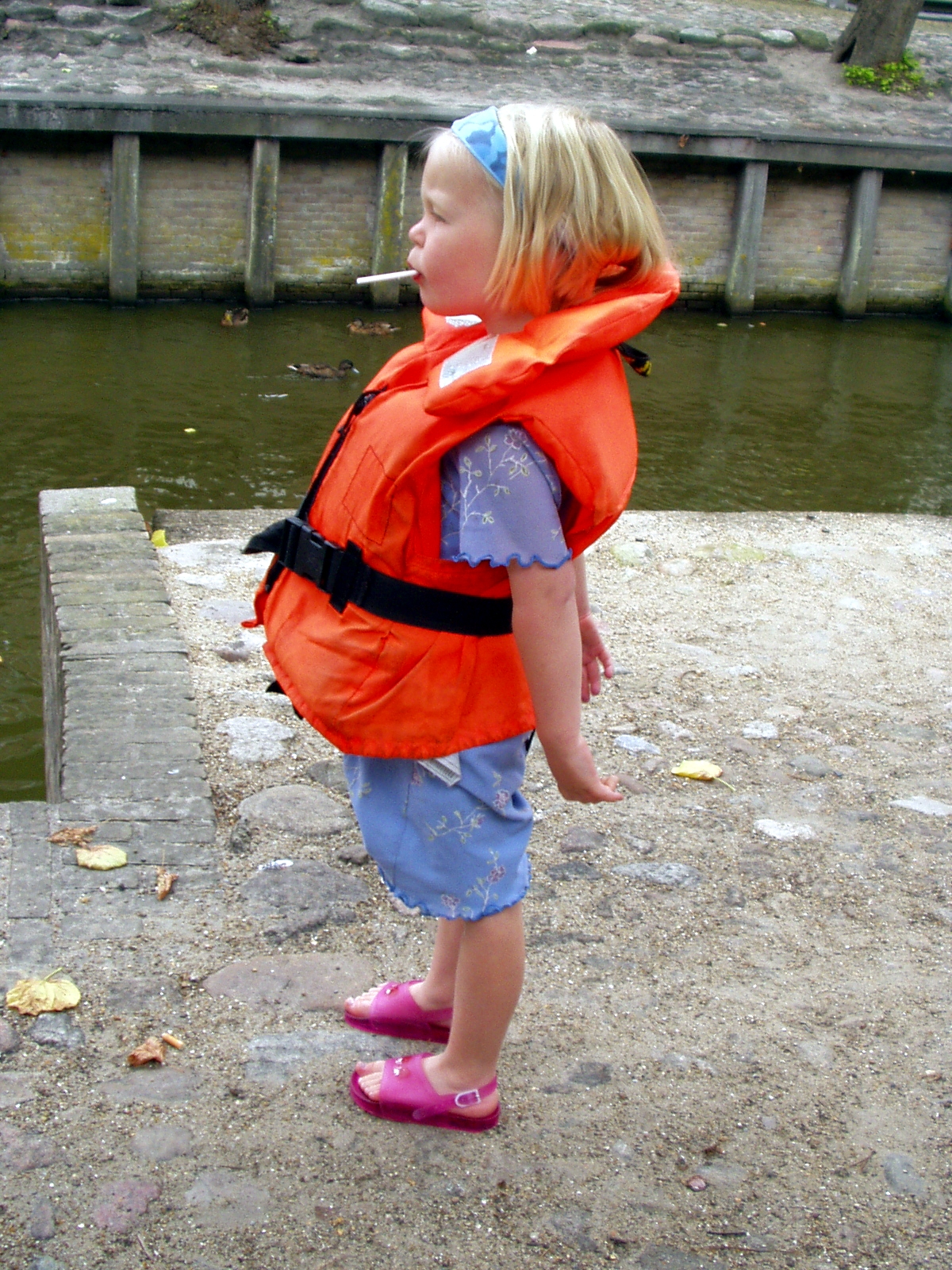
Under Canada's Small Vessel Regulations (SOR/2010-91), the safety equipment required on a pleasure craft is determined primarily by the vessel's length. The length used is the overall length of the hull, measured from the forward-most point to the aft-most point, excluding outboard motors and swim platforms.
The tables below reflect requirements as of the 2026 boating season. For the most current consolidated version, consult Transport Canada's Safe Boating Guide, which is updated annually.
Note that provincial regulations and some waterway-specific rules add requirements beyond the federal minimum. Ontario's Ministry of Natural Resources and Forestry, for example, applies specific rules within certain provincial parks.
Personal Flotation Devices (PFDs) and Lifejackets
All vessels operating on Canadian waters must carry one approved lifejacket or PFD for each person on board, sized appropriately for that person's weight. Transport Canada distinguishes between lifejackets (which are designed to turn an unconscious person face-up) and PFDs (which are more comfortable for active use but do not self-right).
- Inflatable PFDs must be inspected annually; Transport Canada does not allow inflatable PFDs as the sole PFD for children under 16 or for non-swimmers.
- Child and infant PFDs must be approved by Transport Canada for the child's weight range. A PFD labelled "up to 18 kg" is not appropriate for a 25 kg child.
- PFDs must be stored in an accessible location — not sealed in a locker under the forward berth — and each person on board must know where they are.
Throwable Rescue Devices
Vessels under 6 metres require a buoyant heaving line of at least 15 metres. Vessels 6 metres and over require a buoyant heaving line of at least 15 metres plus a lifebuoy with an attached buoyant line of at least 15 metres. The heaving line should float and be immediately accessible from the helm station, not stowed below.
Visual Distress Signals (Flares)
Requirements depend on vessel length and the waters navigated:
- Under 6 metres on inland waters: A watertight flashlight and a whistle or other sound-signalling device are required. Pyrotechnic flares are recommended but not mandated for this size on calm inland water.
- 6 to under 9 metres: Three Type A, B, or C flares, or three smoke signals, or a combination totalling three approved signals. At least one must be a Type A or B.
- 9 metres and over: Six approved flare signals, including at least two Type A.
Approved flares carry an expiry date, typically four years from manufacture. An expired flare cannot be counted toward the legal minimum but should still be carried as a supplement — a Transport Canada officer will not penalize you for having expired flares aboard in addition to current ones.
Electronic visual distress signals (e-flares or VDSs) meeting the ISO 21902 standard were recognized by Transport Canada in 2022 as an alternative to pyrotechnic flares for some vessel categories. Check the current edition of the Safe Boating Guide for eligibility conditions.
Fire Extinguishers
The requirement for a fire extinguisher is triggered by the presence of an enclosed space where flammable vapour could accumulate:
- No enclosed space, outboard motor: No fire extinguisher required, but strongly recommended.
- Enclosed bow or stern compartment, or inboard motor: At least one approved 5BC dry chemical or CO₂ extinguisher.
- Enclosed accommodation space: At least one 5BC, placed at the exit of the accommodation area.
Dry chemical extinguishers should be inspected annually by a certified fire equipment supplier and replaced every six to twelve years depending on the cylinder's proof test date. CO₂ extinguishers require weighing to verify charge — a canister that has lost more than 10% of its rated weight is considered discharged.
Sound Signalling Devices
Under the Collision Regulations, sound signals are required when navigating in or near restricted visibility, or when executing specific manoeuvres:
- Under 12 metres: Any device capable of producing an efficient sound signal (a whistle, horn, or compressed-air canister horn).
- 12 metres and over: A mechanical or power-operated horn meeting the frequency and decibel requirements of the Collision Regulations, plus a bell.
Navigation Lights
Any vessel operating between sunset and sunrise, or in reduced visibility, must show the navigation lights prescribed by the Collision Regulations. For pleasure craft under 12 metres, the standard configuration is:
- Port (red): visible over 112.5 degrees from dead ahead to 22.5 degrees abaft the beam on the port side.
- Starboard (green): same arc on the starboard side.
- Stern (white): visible from dead astern over a 135-degree arc.
- Anchor light (white): visible all-around when anchored outside a designated anchorage.
Combination bow lights that meet the intensity requirements are accepted for vessels under 12 metres. Verify that your lights' candela ratings meet the Collision Regulations minimum — cheap retrofit LED units frequently do not.
Bailer or Bilge Pump
Vessels under 9 metres require a manual bailer (bucket or scoop) or a manual bilge pump. Vessels 9 metres and over require a fixed or portable bilge pump capable of discharging water from the bilge to outside the vessel. An electric bilge pump does not satisfy this requirement unless paired with a manual backup.
Anchor and Line
All pleasure craft must carry an anchor with at least 15 metres of cable, rope, or chain. On Canadian lakes, a fluke or Danforth-style anchor with chain leader performs well in sand and soft mud bottoms typical of Shield lakes. A plough or CQR anchor is better suited to mixed weed and hard sand bottoms found in some Rideau and Trent–Severn sections.
Magnetic Compass
Required on all vessels 8 metres and over. GPS does not replace this requirement under the current regulations. A compass must be mounted where it is visible from the helm; a hand-bearing compass in a pocket does not satisfy the fixed-compass requirement for vessels in this size range.
Carrying Cards and Documentation
Operators of vessels with engines of 10 hp (7.5 kW) or more are required to carry a Pleasure Craft Operator Card (PCOC) or an exempted equivalent such as a marine certificate from another country. Vessel registration documents must be aboard any vessel over 15 gross tonnes or any vessel with a name and home port registered under the Canada Shipping Act, 2001. A Pleasure Craft Licence (a number stencilled on the hull) is required for vessels with motors of 10 hp or more that are not registered.
← Related: Annual Hull Inspection Checklist for Canadian Boat Owners